Tuesday, 15 October 2013

Seminar on Human Right and freedom of Religious Belief in Northern Nigeria


The Christian solidarity Worldwide Nigeria/ UK, Stefanus Alliance International Norway and Heaven's family in a 2days seminar on Human Right and freedom of Religion or Belief (FoRB) for Christian Religious stakeholders in Northern Nigeria.


Ed Brown overseeing a group work during the seminar.


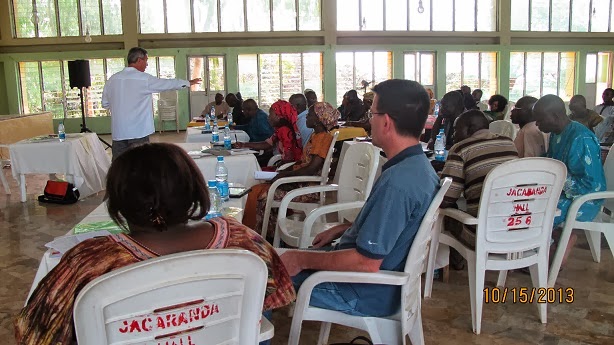
A cross section of the participants .


Ed Brown in action delivering a lecture.


David Warnock from Heaven's family, USA during the seminar.


Christian Association of Nigeria National Youth president and other participants.


 Mr. Shinga(CSW Cordinator Bauchi), Dr. Mutazu (CSW Cordinator Katsina), past. Yola,Rev Isaac Ambi and CAN women wing secretary Kaduna, Mrs. Magaji during a groupwork.

 Engr. SLS Salifu the fifth recipient of the stefanus alliance prize for religious freedom November 2012 and his wife during a group work.


 Barr. Mrs. Tuwan Cecilia of ASPIR ,Rev. Josiah Likita
The CEO CSW-Nigeria , Rev.Yunusa Sabo Nmadu.


The CEO CSW-Nigeria , Rev.Yunusa Sabo Nmadu and David Warnock of the Heaven's family during the seminar.

A little work and and a little play.

Rev. Sule Mashan and Rev Danjuma Bom (BOT Member)

Wednesday, 2 October 2013

Nigeria: At Least 160 Dead In Terrorist Related Violence Last Week


At least 160 people have died in terrorist related violence Last week in Nigeria’s Yobe and Borno States. 
 On the evening of 18 September, Boko Haram members armed with Kalashnikovs, rocket launchers and homemade bombs are reported to have stormed Yadi Buni Town in Yobe State, setting fire to a makeshift police station, telecommunications masts, parts of the local government headquarters and the home of the divisional police head, whose wife was burnt to death inside the building. The son of the Yobe Peoples Democratic Party's (PDP) youth leader is also said to have been killed, while one soldier and nine sect members died in an ensuing shoot-out.
 
On 17 September, 143 commuters were killed and several abducted when well-armed Boko Haram gunmen in military fatigues and bullet-proof vests ambushed vehicles along the busy Maiduguri to Damaturu Express Way in the early evening. Travellers were reportedly asked to produce their ID cards, then were lined up and shot.  According to one survivor, people from the Borno State capital, Maiduguri, were singled out for execution. 

The gunmen went on to overrun Benisheik Town, 75km west of Maiduguri, killing around 14 people and torching over 100 homes, businesses and vehicles.  According to one report, most of the dead were members or otherwise associated with the Civilian Joint Task Force (JTF) and were beheaded. Three policemen and two soldiers were also reported to have died in the violence. This was the second assault on Benisheik in ten days; five sect members and 13 civilian vigilantes lost their lives in earlier violence. 

Reprisal attacks by Boko Haram on vigilantes, their families and communities are becoming more regular, and are increasingly taking the form of collective punishments. At least 50 of over 160 people murdered by the sect in August were vigilantes. 

Also on 17 September, army authorities disclosed that 15 soldiers and a lieutenant had been killed by Boko Haram along the Baga-Maiduguri Road in Borno State, although this figure has been disputed by anonymous local defence sources who claim at least 40 soldiers were killed and 65 others are missing following an ambush. The army also stated that 150 sect members were killed by troops over the previous weekend in a battle in Kafiya Forest in Borno that claimed the life of key Boko Haram commander Abba Goroma.  

Mervyn Thomas, Chief Executive of Christian Solidarity Worldwide (CSW), said, “We send our heartfelt condolences to those who lost loved ones in the previous week’s violence. The rise in reprisal attacks on entire communities is deeply worrying, and is clearly designed to terrify people into ending all cooperation with the security forces.  Having incorporated the Civilian JTF into their system, the security services also have an obligation to ensure the protection of its members. Ultimately, vigilante groups cannot match a well-armed, well resourced insurgency. It is therefore vital that the Federal Government allocates sufficient troops to these states to address this issue. The government must also disrput Boko Haram’s sources of funding as a matter of urgency, and will need the assistance of neighbouring states and the rest of the international community in order to do so effectively.”

For further information or to arrange interviews please contact Kiri Kankhwende, Press Officer at Christian Solidarity Worldwide on +44 (0)20 8329 0045 / +44 (0) 78 2332 9663, email kiri@csw.org.uk or visit www.csw.org.uk.

Monday, 16 September 2013

COUNTRY OF THE WEEK

ALGERIA ( Capital : Algiers )
Location - North Africa on the Mediterranean coast
Population - 37,900,000
Languages- Arabic and  Berber
Religion -  Sunni Islam 99% (state religion), Christians and Jews 1%

PRAYER REQUEST
  1. Pray for persecuted Christians as they are denied the right to exercise religious freedom so Most Christians meet in homes, to protect themselves. So the Christian population/ Missionary groups can only conduct humanitarian activities without government interference as long as they are discreet and do not proselytize openly. Since 2006 missionary outreach among Muslims can be punished with up to five years in prison. Pray that Algerian believers will respond to pressure with faith and perseverance and continue to grow, pray for teachers, Bible and Commentaries to become available to every believer.

2.       When questioned about Muslims becoming Christians in 2001 the Algerian Minister of Religion affirmed that apostates from Islam should be killed, according to Islamic Shari'a law. Police publicly body-search and interrogate even lady converts for practicing Christianity, they are fined a huge sum of money and asked to renounce their faith or face the law. Pray God will use the current restrictions to draw many more Algerians into a relationship with Christ. Pray for conversions to Jesus Christ  among powerful Government/Islamic leaders in Algeria.

  1. Pray for the nation’s young people, who make up 65 to 70 percent of the population (and a large majority of Christians). Pray they will not be frustrated or disillusioned, but rather strengthened and encouraged in Christ Jesus.
  2. The media attention will have a positive impact on the church, drawing more people to respond to the love and truth of Jesus Christ. The search and hunger by many for a God of love to increase and blossom in finding Jesus Christ as the answer
  3. The Berber people could make up as much as 40 percent of the population, but the Arab majority have tried to impose their culture on them and stopped them from using their own language. Thousands in the Kabyle region have become Christians and meet openly in their villages. Pray for these churches that they would be protected and grow in their faith in God.


Monday, 9 September 2013

IRAN: “FIRST RELIGIOUSLY MOTIVATED MURDER OF AN IRANIAN BAHA'I IN 15 YEARS”

Christian Solidarity Worldwide (CSW) is concerned to learn of the murder on 24 August of Ataollah Rezvani, a prominent member of Iran's Baha’i community, in what the Baha’i Community of the United Kingdom (UK) is stating may be the first religiously motivated murder of an Iranian Baha'i in 15 years.


Mr Rezvani’s body was found in his car in his hometown, the southern city of Bandar Abbas.  Reports indicate he was shot in the back of the head after being forced to drive to a remote area by his assailants.According to the Baha’i Community of the UK, the murder was preceded by a campaign of intimidation and harassment by Iranian authorities against Mr Rezvani and his family designed to force them to leave the city. Prior to his murder, Mr Rezvani had come under pressure from the Ministry of Intelligence, which later colluded in his dismissal from his job in water purification. Mr Rezvani had also received several threatening telephone calls from unknown persons.

Mr Rezvani’s murder also comes at a time of increased pressure on Iran's religious minorities and a surge in anti-Baha’i rhetoric by various clerics. On 31 July 2013, Supreme Leader Ayatollah Ali Khameni issued a fatwa (religious edict) against the community in which he called on Iranians to avoid Baha’is and labelled them a ‘deviant and misleading sect’.Despite the Baha’i Community being the largest religious minority group in Iran, it is not officially recognised and is refused legal status.  Since 1979, over 200 of its leaders have been killed or executed, and thousands more imprisoned. Baha’is are barred from accessing further education and employment in the public sector, with over 10,000 having been dismissed from university and government jobs.  In 2008, seven Baha’i leaders were arrested and were each sentenced to 20 years imprisonment in 2010 for ‘forming an illegal cult’.  According to the US Commission on International Religious Freedom (USCRIF), as of February 2013, at least 110 Bahia’s are being held in prison solely on account of their religious belief, twice the number held in early 2011.

Mervyn Thomas, Chief Executive of Christian Solidarity Worldwide (CSW), said: “We are shocked to hear of the murder of Mr Rezvani and are deeply concerned at assertions that it may have been religiously-motivated.  His murder followed a campaign of official harassment and occurred against the backdrop of increasing anti-Baha’i rhetoric, not least the recent fatwa against the community issued by the Supreme Leader. History shows that such rhetoric and hate speech increases the vulnerability of targeted communities and can be a precursor of violence because it appears to grant official sanction for it. CSW urges the Iranian authorities to end the use of inflammatory rhetoric against minority religious communities that merely seek to practice their faith peaceably and pose no threat to the state. CSW also urges Iran to ensure the killers of Mr Rezvani are swiftly brought to justice, to return full citizenship rights to the Baha’i Community and to guarantee freedom of religion and belief for all religious communities, in accordance with the nation's obligations as a signatory to the International Covenant on Civil and Political Rights (ICCPR).”
 

Monday, 26 August 2013

INDIA: Five Years On From Kandhamal Violence, Victims Await Justice, Rehabilitation, And Peace


The Christian community in Kandhamal district, Odisha state (formerly Orissa) last weekend marked the fifth anniversary of a wave of violence in which an estimated 90 people were killed and at least 54,000 displaced. Much of the violence was brutal in nature, including sexual violence and burning or burying victims alive. Among the events to mark the anniversary, there will be a rally in Bhubaneswar on 25 August and in Kandhamal on 30 August.
The long-term impact of the 2008 violence, which was the culmination of decades of anti-Christian hate speech and smaller-scale attacks in the area, continues to be felt.  Against the backdrop of a rising number of acquittals of perpetrators of the 2008 violence, the Christian community still faces harassment and violence. Reportedly, 29 girls from their community were sexually assaulted in the last year alone.
Thousands of victim-survivors still fear returning to their villages owing to the threats they continue to receive. At least 5,000 have relocated to Salia Sahi, the largest slum in state capital Bhubaneswar. Some have migrated to other states, including Kerala. Many in these displaced communities have paid a significant economic penalty for their relocation.
Paul Pradhan, director of Pallishree Seva Sadan, a social welfare centre in Paburia which was destroyed in the violence and has not been rebuilt, said, “Our people have lost everything. They have lost their houses, their tools, everything. Many people have left and have still not come back to their villages. In most areas, peace has still not been restored. Until adequate compensation is given, the people cannot recover. The government is not giving enough compensation. There should be a re-survey of damages. Even my own case is very miserable. I am not able to recuperate, while perpetrators are thriving. My own place is still destroyed. I am also not well, my health is not well”.
Many of the victims are still awaiting justice and adequate compensation for their losses.   Although the conviction rate of around 30 percent is significantly higher than the national average, many of those convicted are now on bail, even for the most serious offences, and the majority of complaints were never subject to a police investigation.  Many witnesses in the cases that have been investigated have been threatened against giving evidence in court, and without sufficient protection, a large number have lost faith in the justice system.
Some human rights activists report facing harassment not only from Hindu extremist groups but also occasionally from the police, who accuse them of being Maoist supporters.
Fr Ajay Singh, a prominent Odisha-based human rights activist, faced renewed threats after being awarded the Minority Rights Award by the National Commission for Minorities in July this year. He said, “Insecurity and fear still prevail among the Christian community here due to the rise in the number of acquittals of criminals.  Justice delivery systems have failed and are costly.  The people cannot afford it.  The Church and the civil society groups are not able to make the government accountable to the people.  Neither do the duty-bearers feel obliged to the community.  Besides the insecurity and fear, frustration is also rampant.  90% of victims are struggling for their own livelihood. This is a multi pronged problem. The challenge before us is to make the duty bearers accountable. How do we make the criminal justice system function?  Who will do it? There is no other way but to make people aware. The right holders should be encouraged to stand up for their rights. The history of the Kandhamal situation shows us that every time we spoke about peace without fighting for justice, violence continued to take place”.
David Griffiths, South Asia Team Leader at Christian Solidarity Worldwide (CSW), said, “CSW remains deeply concerned by the poor delivery of justice, inadequate rehabilitation for victims, and the lack of genuine peace in the area.  We are also concerned by reports of continuing incidents of violence, and by allegations of harassment by human right defenders working on behalf of victims.  Much more needs to be done locally before it can be said this violence has been resolved.  Communal violence of this nature has a long genesis and a long-term impact, and often follows a predictable pattern.  In recognition of this significant anniversary, we again urge the Government of India to introduce the Prevention of Communal and Targeted Violence Bill, which will provide a much more effective framework for dealing with violence of this sort in future.”
For further information or to arrange interviews please contact Kiri Kankhwende, Press Officer at Christian Solidarity Worldwide on +44 (0)20 8329 0045 / +44 (0) 78 2332 9663, email kiri@csw.org.uk  or visit www.csw.org.uk
Christian Solidarity Worldwide (CSW) is a Christian organisation working for religious freedom through advocacy and human rights, in the pursuit of justice.

PERU: Csw Renews Calls For Justice On 10th Anniversary Of Truth And Reconciliation Report


As Peru observes the tenth anniversary of the publication of final report and recommendations of its Truth and Reconciliation Commission (TRC), Christian Solidarity Worldwide (CSW) has expressed concern at the lack of justice in cases involving crimes against humanity in Peru.

The TRC was set up by the Peruvian government to investigate the causes and impact of two decades of internal violence and published its final report alongside detailed recommendations to the government on 28 August 2003. The report found that the conflict, which pitted extreme left guerrilla groups the Shining Path and the Tupac Amaru Revolutionary Movement (MRTA) against government forces, left almost 70,000 victims. The TRC found that the Shining Path was responsible for the largest number of victims, the majority of whom were civilians, while state forces were responsible for 37%. Over the past ten years, a country-wide victim registration project has caused those numbers to be revised and it is now believed that there may have been more than 100,000 victims.
The TRC also published detailed recommendations, with an emphasis on justice for victims, aimed at preventing future violence. Unfortunately a large number of cases, especially those involving state forces, have stalled due to obstruction from government ministries and the military. In some instances, cases have been shelved altogether.
In one example, the case of Jorge Parraga Castillo, a protestant pastor who was forcibly disappeared, tortured and later killed on the Manta military base in 1989, was archived after the Ministry of Defence and the military refused to provide the names of those responsible. Prosecutions of those responsible for massacres, including the extra-judicial execution of six young men during a church service in 1984 in the hamlet of Callqui and the murder of 123 civilians including infants and the elderly in the community of Putis in the same year, have stalled in the courts due to lack of cooperation by the Ministry of Defense and the military.
CSW’s Acting Advocacy Director Benedict Rogers said, “As we celebrate the ten year anniversary of this groundbreaking report, we call on President Ollanta Humala to prioritise the full implementation of the TRC’s recommendations. CSW continues to monitor the progress of cases including the Callqui and Putis massacres, and lauds the persistence of our local partner organisation, Peace and Hope, and others who continue to pursue truth and justice on behalf of the victims. We urge the Peruvian government, including the Ministry of Defence and the military, to provide the names of those responsible for human rights atrocities and to cooperate actively with investigations. As institutions which are sworn to protect the civilian population and uphold the rule of law in Peru, they must take the lead in the fight against impunity.”
For further information or to arrange interviews please contact Kiri Kankhwende, Press Officer at Christian Solidarity Worldwide on +44 (0)20 8329 0045 / +44 (0) 78 2332 9663, email kiri@csw.org.uk or visit www.csw.org.uk.
Christian Solidarity Worldwide (CSW) is a Christian organisation working for religious freedom through advocacy and human rights, in the pursuit of justice.

CHINA: Linfen House Church Leader Beaten, Threatened With Death.


Church leader Li Shuangping, a leader at Linfen church, was beaten and threatened by unknown assailants on the night of 13 August, according to reports from China Aid.
Li had been driving to his home in Shanxi Province and was forced to stop his car when a man who seemed to be intoxicated staggered into the road. He was then dragged into a black car which had pulled up alongside his car, tied up, blindfolded, and pinned down while three men beat him around his head and body. One man also threatened to kill Li and his family members, including his children. Li was then thrown out of the car.
Li believes the perpetrators were working for the local government and he sees this is an attempt to threaten house church leaders. During the incident, one of the men asked Li how he would like to die as a result of being a house church leader.
In 2009, the 50,000-strong Linfen church was raided by several hundred police and plainclothes officers, after which Li was sentenced to two years of re-education through labour. During the raid on the property, Bibles and the building itself were damaged and a number of church members were beaten and injured. 
Some church leaders attempted to travel to Beijing to lodge a formal complaint but were arrested on the way. Li Shuangping and several other leaders were released in July 2011; others were released in 2012 and 2013. However, some remain in prison, including Yang Rongli who is serving a seven year sentence.
Benedict Rogers, East Asia Team Leader at Christian Solidarity Worldwide (CSW) said, “This attack appears to be an attempt to intimidate the Linfen church leaders and their congregations. The Chinese authorities have a responsibility to protect all citizens from attacks on their personal safety and to investigate serious threats against them and their families by both state and non-state actors. We call on the Chinese government to immediately put an end of all kinds of attacks and restrictions on Linfen church leaders, and urge the authorities to immediately release those leaders still in prison.”
For further information or to arrange interviews please contact Kiri Kankhwende, Press Officer at Christian Solidarity Worldwide on +44 (0)20 8329 0045 / +44 (0) 78 2332 9663, email kiri@csw.org.uk or visit www.csw.org.uk.
Christian Solidarity Worldwide (CSW) is a Christian organisation working for religious freedom through advocacy and human rights, in the pursuit of justice.